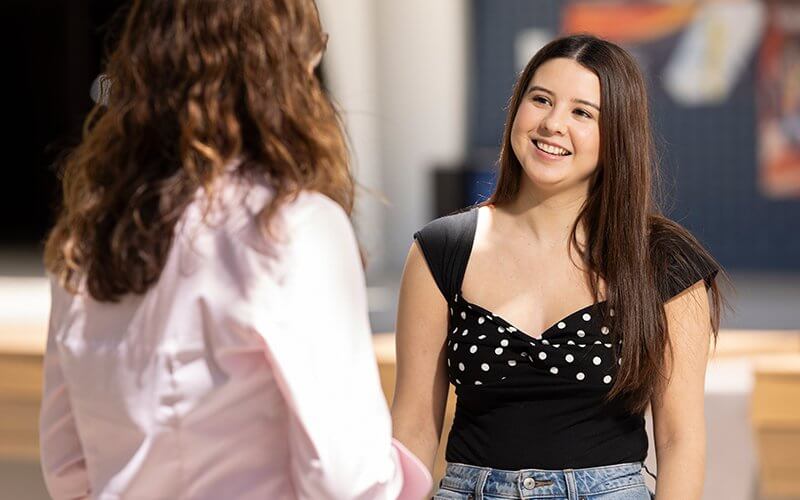
Cal State Fullerton’s Latinx Lab for Storytelling and Social Justice is known for its innovation in humanities research.
Among the first of its kind in the California State University system, the Latinx Lab is a hub for academic scholarship in Latinx and Chicanx studies. The lab produces high-quality research and special collections while also providing students with hands-on research opportunities studying such areas as Latinx science fiction, children’s and adults’ storytelling, and pandemic and queer and trans Latinx regional oral histories.
For its research contributions and focus on student success, the lab was awarded a $1 million grant from the Mellon Foundation. The three-year grant will support the retention and advancement of faculty and students, training in humanities research methodologies, and research project development.
Open to all students who are interested in the field of Latinx/Chicanx humanities, the Latinx Lab has successfully introduced humanities methodologies to more than 2,000 student researchers.
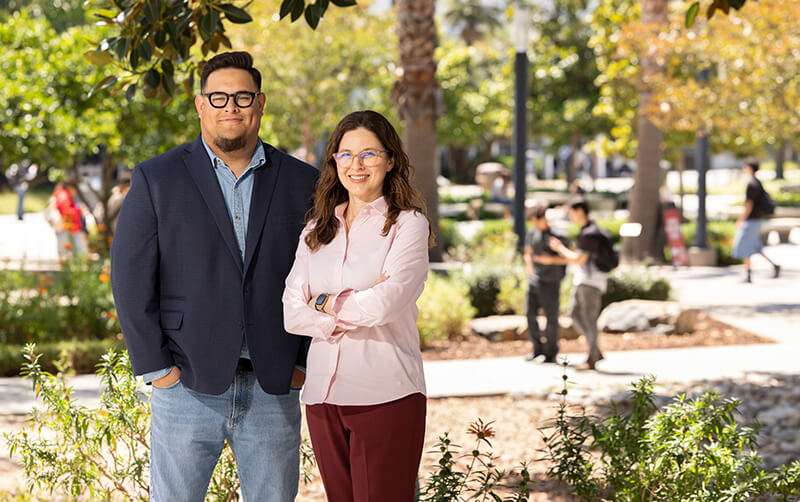
“We are leading collaborative and relational projects that advance knowledge and prioritize the professional development of our students,” said Mario Obando, associate professor of Chicana and Chicano studies and faculty director of the lab.
Gabriela E. Nuñez, associate dean of student relations for the College of Humanities and Social Sciences, has been involved with the lab since its inception. She said that the lab’s success is bolstered by the university’s position as the only CSU campus in Orange County, making it a hub for intellectual inquiry and collaboration on Latinx humanities projects.
“Not only is CSUF a Hispanic-Serving Institution, but we are surrounded by local communities and organizations that make meaningful partnership, engaged scholarship, and student-centered programming both possible and impactful,” said Nuñez, who is also a professor in the Department of Chicana and Chicano Studies.
She added that CSUF is home to valuable resources in Chicanx and Latinx studies, such as the Zúñiga Research Collection, and the U.S. Latinx Science Fiction Collection, which is among the first of its kind in the country.
The lab’s virtual space, LatinxLab.Studio, expands access to research and resources produced by CSUF faculty and students. The virtual space includes the Latinx Literary Journalism Database, the Isthmus and Borderlands Podcast, and a zine studio.
Class of 2026 grad Ellie Hernandez joined the Latinx Lab as a research intern to strengthen her research portfolio as she prepares to pursue a graduate degree in psychology.
“I’ve developed stronger critical thinking and analytical skills, especially when it comes to reading texts. I’ve been trained to ask deeper questions about whose voices are centered and whose are missing,” said Hernandez. “Being involved in those conversations strengthened my ability to connect academic work to real-world practice.”
Latinx Lab project leads include: Marie Nubia-Feliciano, lecturer in Chicana and Chicano studies; Asya Harrison, assistant professor of psychology; Natalie Fousekis, professor of history; Eddy F. Alvarez Jr., chair and associate professor of Chicana and Chicano studies; Monica Hanna, professor of Chicana and Chicano studies; Barbara Miller, Zúñiga Research Collection and Latinx Resource Community Center librarian; Lisa Mix, director of University Archives & Special Collections; David Sandner, professor of English, comparative literature and linguistics; Alexandro Gradilla, associate professor of Chicana and Chicano studies; David Vazquez, professor at American University; Sarah D. Wald, associate professor at University of Oregon; Priscilla Solis Ybarra, professor at UC Santa Barbara; and Moe Gámez, Ph.D. candidate at University of Oregon. Nuñez and Obando are also project leads.