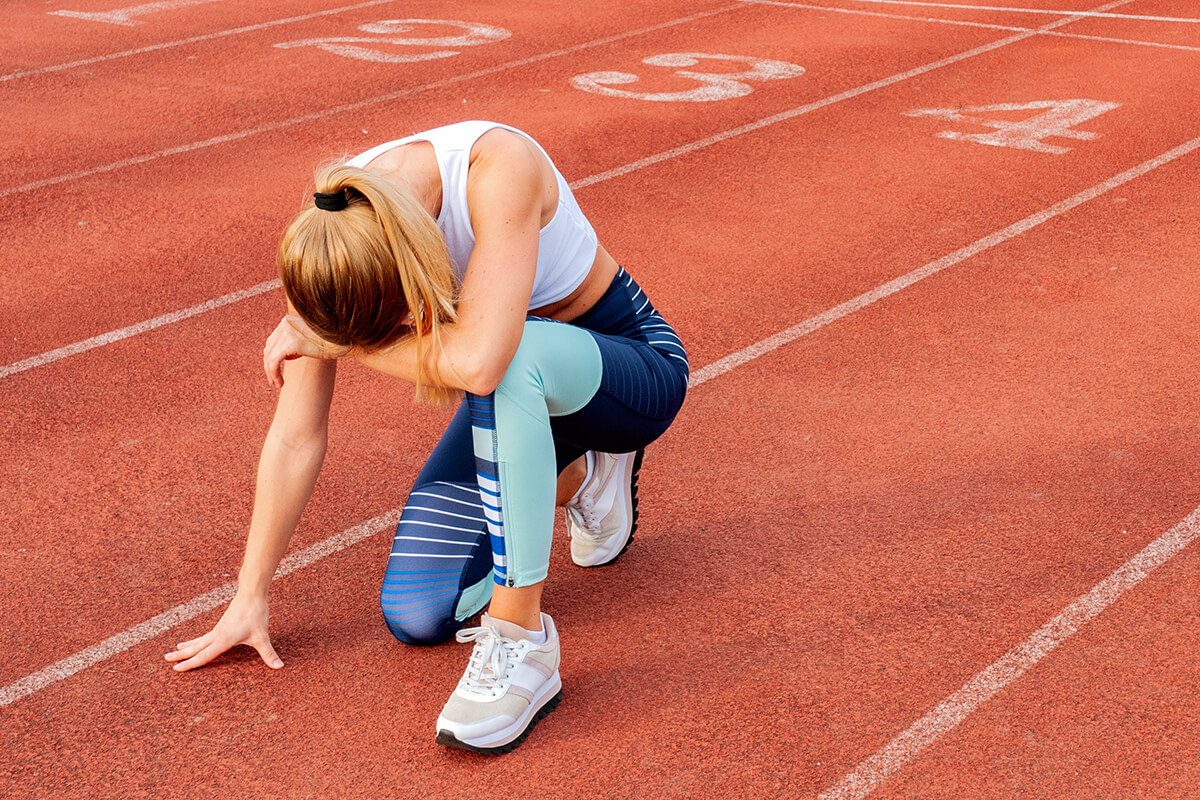
As both athletes and students, college athletes face a lot of pressure. In fact, the NCAA Student-Athlete Health and Wellness Study (2023) found that 16-35% of athletes felt mentally exhausted most days.
Researchers at Cal State Fullerton and collaborators at the University of British Columbia have conducted a review to characterize factors associated with burnout among collegiate athletes. Their new journal article, “A Scoping Review of Intercollegiate Athlete Burnout,” has been published in the Journal of Intercollegiate Sport.
”Broadly, we wanted to determine who is most at risk, and how coaches, parents, mental performance consultants, etc., could potentially help cultivate those protective factors that insulate against burnout,” says Katrina Waldhauser, a CSUF Assistant Professor of Kinesiology who studies sport and exercise psychology.
The team of researchers combed through 29 studies encompassing over 8,000 collegiate athletes. Most studies in the review drew on Raedeke and Smith’s (2001) conceptualization of burnout, which is characterized by three core dimensions: “emotional/physical exhaustion, reduced accomplishment and devaluation of the sport.”
The scholars indicate conditions that correlated with a higher chance of burnout for college athletes, including:
- Personal characteristics, such as perfectionism/grit
- Psychosocial factors, such as competitive anxiety
- Interpersonal factors, such as experiences of stress
- Demographics (female college-athletes reported more burnout than male athletes)
The scholars indicate conditions that correlated with a lower chance of burnout for college athletes, including:
- Sports-specific gratitude (gratitude for participation in one’s sport)
- Supportive coaching behaviors
- Perceived social support
- Self-determined motivation (i.e., more internalized, not related to external rewards)
The authors noted an important limitation of their findings: 76% of the studies in their review were cross-sectional, making it difficult to determine whether the factors they identified contribute to burnout, result from burnout, or interact with burnout over time.
The researchers hope their findings can help other coaches, athletics departments, and even parents develop more effective strategies to support both student-athlete performance and well-being.
“We are interested in how we might be able to intervene,” said Waldhauser. “We do know that if athletes have more of that internal motivation, they’re less likely to report burnout. There are social or psychological factors, like motivation or managing stress, with which we may be able to support athletes to help prevent or manage burnout.”
The researchers also hope to motivate future scholars to dig deeper; their review underscores a need for research that distinguishes the effects of sport-specific stressors from other pressures student-athletes experience, including academic, social and financial stressors.