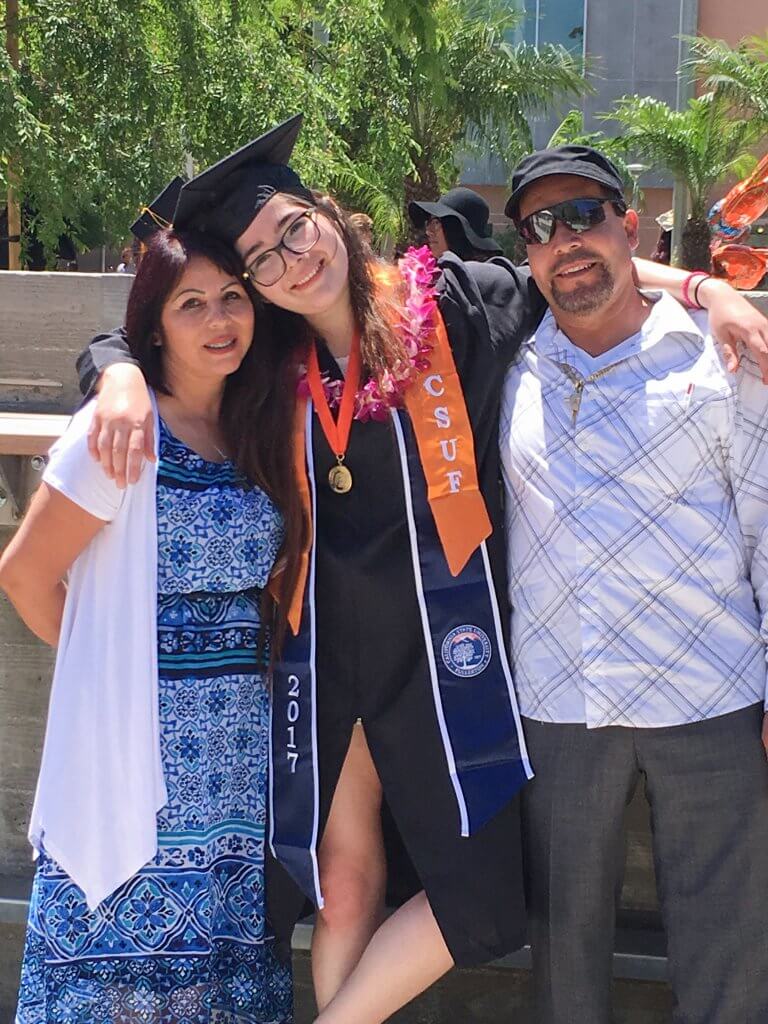
Human geneticist Aileen Nava admits math wasn’t always her best subject. But the CSUF alumna (B.S.‘17), who studied biology and holds a doctorate in genetics from UCLA, always knew she was good at science, so she just worked at it.
Nava, now a postdoctoral researcher at UCLA developing diagnostic tools and therapies for neurodegenerative diseases, was a first-generation college student who had to work while attending school. The future professor and entrepreneur’s journey into scientific research was motivated by two things: her sister’s health challenges and her mother’s belief that education was a pathway to improve one’s quality of life—the idea that “once you learn something, no one can take it away from you.”
If her family provided the inspiration, seeing other CSUF student researchers present their work at a symposium was the catalyst. Nava was accepted into the CSUF Bridges to Stem Cell Research (BSCR) program, an immersive training that places students in labs across California equipped for specialized stem cell research. With support from a grant from the California Institute for Regenerative Medicine (CIRM) to CSUF BSCR, Nava landed a paid internship at Stanford University.
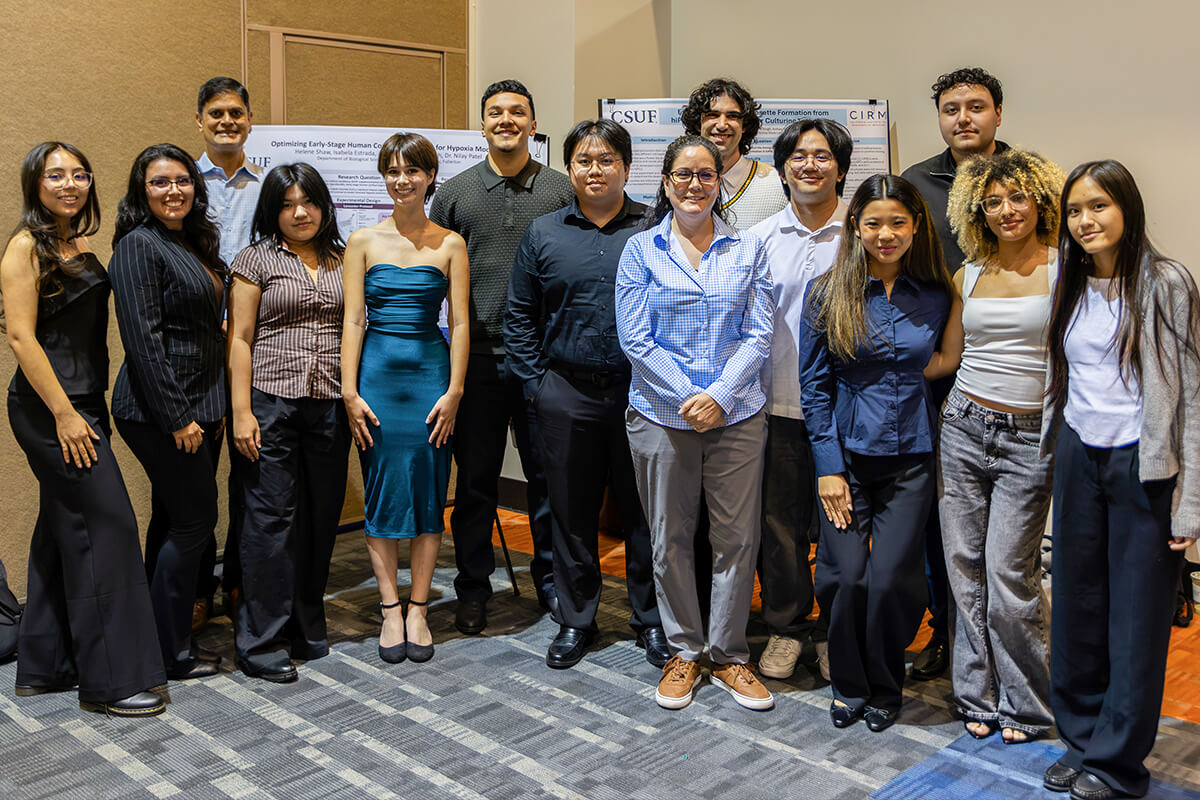
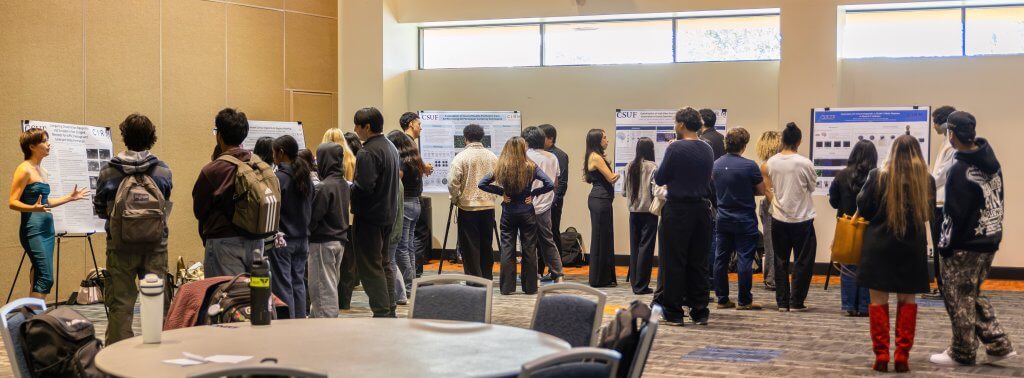
Earlier this month, CSUF hosted the same event that led Nava to dive into scientific inquiry. The Stem Cell Symposium drew 16 student researchers from the BSCR program and a separate CSUF internship program – the Creating Opportunities through Mentorship and Partnership Across Stem Cell Science (COMPASS) –to showcase posters about their laboratory research. The students shared findings from their research at CSUF, Caltech, Cedars-Sinai, Stanford, UCI and UCLA labs, discussing topics such as the role of stem cells in embryonic development, neuroscience, organoid models, breast cancer, and bone marrow regeneration.
Since BSCR began in 2010 and COMPASS started in 2023, CIRM grants have helped more than 180 students participate in advanced stem cell laboratory research.
CIRM just provided an additional $6.9 million. BSCR program director, Associate Professor of Biological Science Nilay Patel, says the renewed grant “allows us to train undergraduates who can plug into many advanced-level jobs, all the way from discoveries at the bench to regenerative therapies available to patients.”
BSCR and COMPASS reflect a broader commitment at Cal State Fullerton to expand opportunities for students through mentorship, experiential learning and career preparation. The efforts align with the CSUF Fullerton Forward 2025-2029 Strategic Plan and the CSU Student Success Framework, which emphasize helping students to gain experience that will help them thrive at CSUF and beyond graduation.
Like Nava, alumni from BSCR have continued their rise in research, attending PhD programs at Stanford and Johns Hopkins. In addition, they have gone on to medical school, and companies like Genentech and at startup companies like Aureka.
Associate Professor of Biological Science Alison Miyamoto directs the COMPASS program that she says provides hands-on experiences that can pave the way beyond graduation.
“What is valuable about COMPASS is the combination of mentoring, scientific instruction, and external internship experiences,” Miyamoto says. “One of the best aspects of the program is that students can use their second internship as a way to gain entry to their first job post-graduation.”
COMPASS alumni have gone on to positions in biotechnology firms such as Eurofins and Avid Bioservices, as well as doctoral programs and research positions at institutions like City of Hope, the national diabetes and cancer research and disease treatment center headquartered in Duarte, Calif.
While advanced stem cell research can feel out of reach for most undergraduates, CSUF Biological Sciences faculty—including Patel, Miyamoto, Valerie Chavez and Laura Arce—along with academic coordinator Ashley Neil, have developed modules to demystify these advanced topics and provide critical hands-on opportunities. The BSCR students enroll in a seven-month, pre-placement training program that teaches undergraduates about tissue culture, stem cell differentiation, organoid formation, lab documentation and data analysis. These opportunities scaffold student learning.
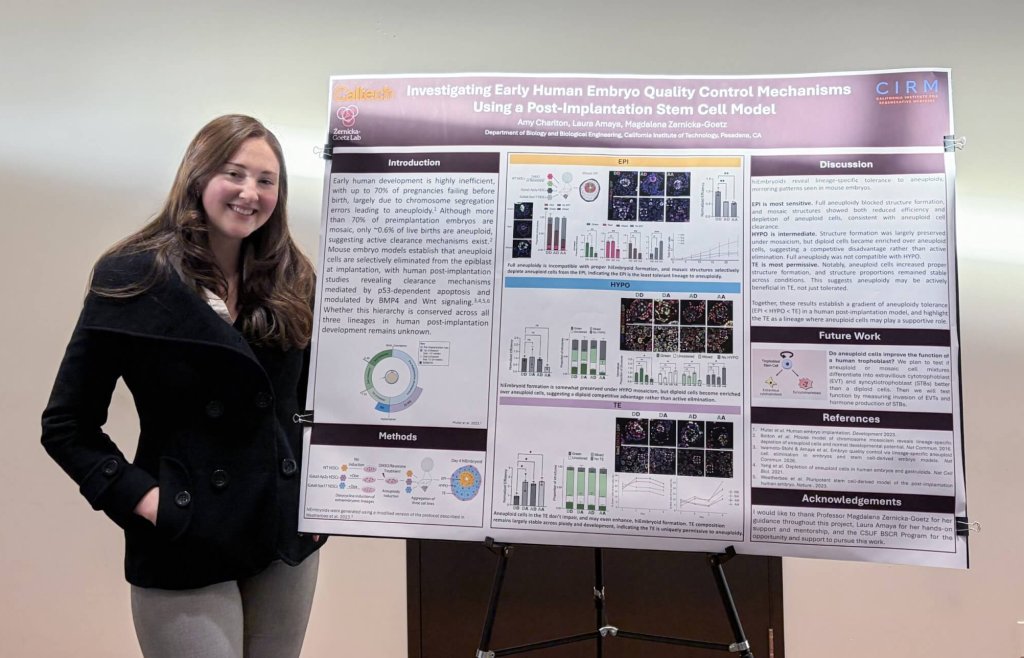
Prospective students might take advice from CSUF biology student Amy Charlton, who presented a poster at the symposium about her research lab at Caltech, where she investigates the role that stem cells play in the initial stages of embryonic development.
Reflecting on her transition to the laboratory, Charlton said it was hard to adjust, “but there are so many wonderful people. My lab, in particular, is full of wonderful women who are incredible scientists and come from literally all over the globe. They are very inspiring.”
When she felt nervous, Charlton stayed determined: “I knew that I was good enough to be here, and that I had the BSCR training and the knowledge to be here.”
She added, “Science is all about determination. Tons of failed experiments led to this poster.”
As for where Charlton is heading when she graduates in December? She was offered a position as a paid research assistant at Caltech, of course.