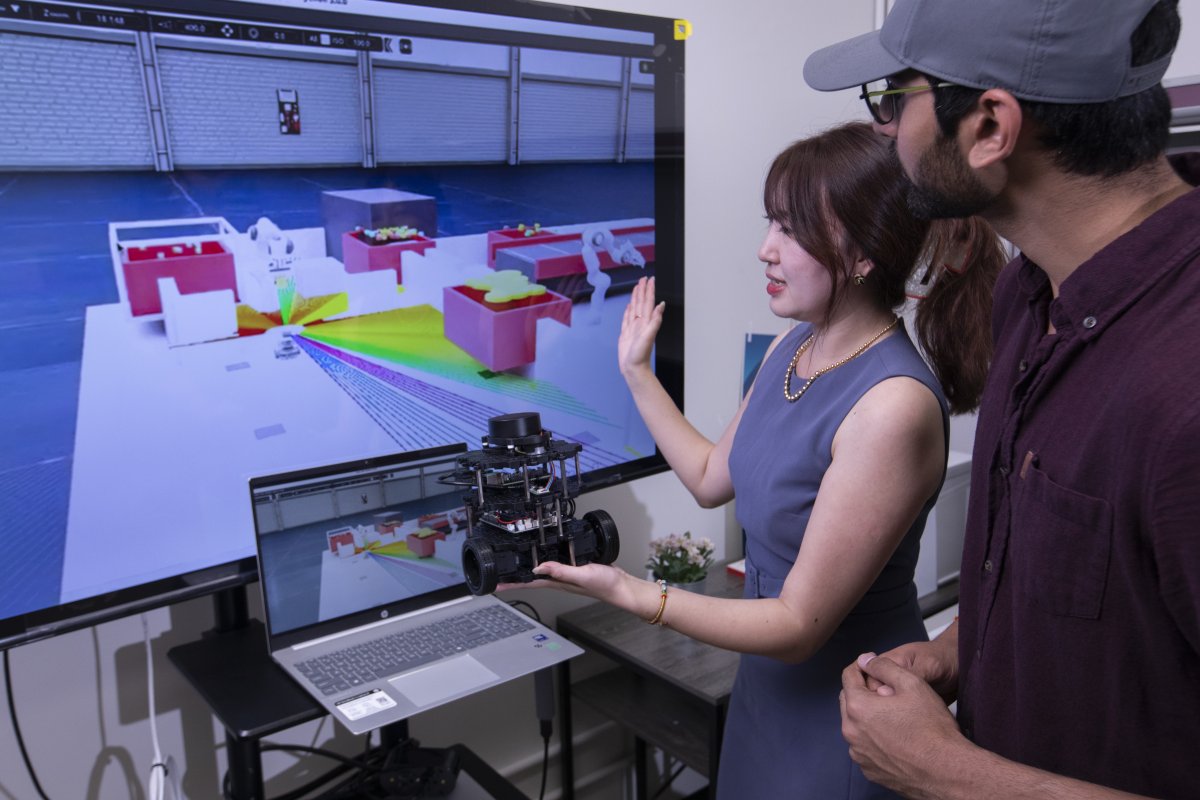
As AI-driven autonomous systems become integral to the manufacturing industry, Cal State Fullerton is working to ensure students learn how to build “trust” between humans and robots.
Applied artificial intelligence researcher Bingling Huang is leading the “Building Trust in Human–AI Robotics Teaming for the Future Manufacturing Workforce” project, supported by a nearly $100,000 contribution from Honda.
“Trust is a key factor in successful human-AI teaming for the future of manufacturing, just as it is in human teams. Engineering education must help students understand how to build trust in these interactions,” said Huang, assistant professor of mechanical engineering.
Huang, who directs the Design for Intelligent Systems and Learning Laboratory in the College of Engineering and Computer Science, said the project aims to prepare students not just to use AI, but to trust it wisely and design it responsibly.
“AI and robotics are changing the way manufacturing work is done,” Huang said. “Many still view AI as a competitor rather than a collaborator.”
Mechanical engineering graduate student and research assistant Rahul Pravinbhai Lunagariya is among the 20 students selected this summer to participate in the one-year project. Through the project, more than 200 students will be introduced to trustworthy AI as concepts are integrated into existing engineering courses through demonstrations, simulation-based activities and student projects.
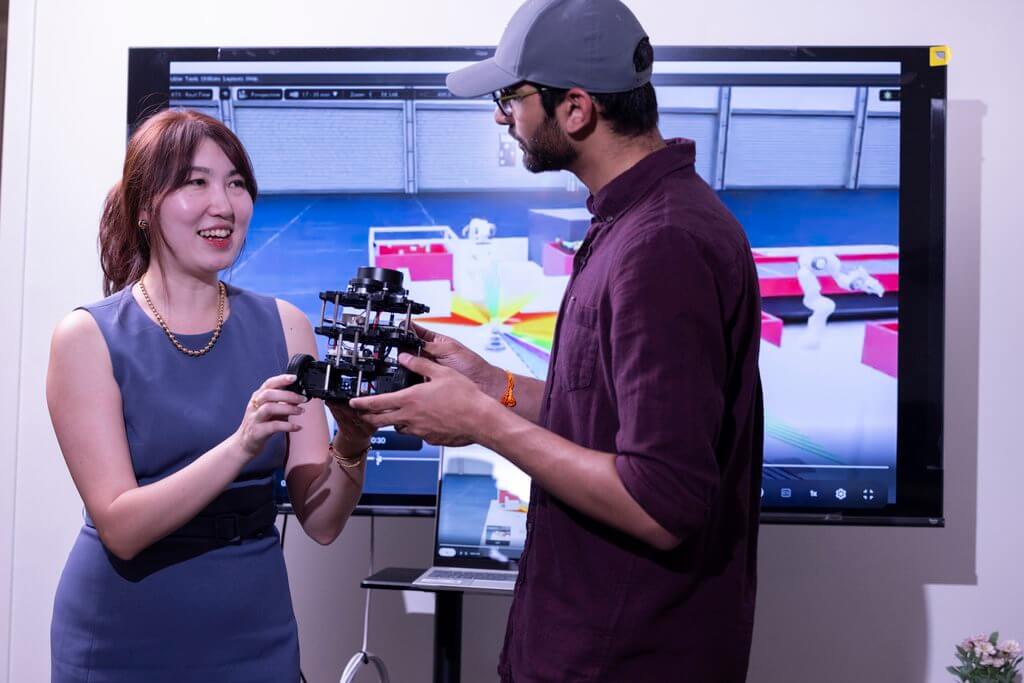
For Lunagariya, he joined the project to learn more about how human trust–AI teaming can be defined, measured, and designed for, not just observed and left unaddressed.
Before coming to CSUF for graduate studies, Lunagariya interned at one of India’s largest salt producers, where large-scale conveyor systems and heavy automation were used for coal transportation and for lifting heavy industrial components such as shafts and boiler parts. He then worked as a production engineer at an automobile parts manufacturer.
“Across these experiences, I noticed the same pattern: Workers either didn’t fully trust the automation systems around them or the company avoided automation altogether,” said Lunagariya, president of CSUF’s Society of Manufacturing Engineers student chapter.
“The reason was a lack of understanding and transparency around how these systems behaved. Workers couldn’t predict what the machines would do next, and that uncertainty made them hesitant or resistant.”
Through the new project, Lunagariya will gain hands-on experience in simulation-based research, deepen his understanding of human factors in AI systems, and build skills in data analysis and experimental design that he can carry forward in his future research career.
“The purpose of the project is to give students in-depth knowledge on how people and AI-driven robots can work together safely and effectively in manufacturing environments,” Huang said.
Students will develop a virtual manufacturing environment in which they can work with simulated robots, assign tasks and observe how the robots respond, supporting both research and education.
AI can help robots recognize parts, guide robotic arms during assembly, inspect products for defects, predict when equipment may need maintenance and optimize production schedules.
“This project will help our students become AI-ready engineers,” Huang said. “They will know how to use AI and robotics tools and also how to evaluate whether an autonomous system is understandable, reliable and appropriate for human collaboration.”