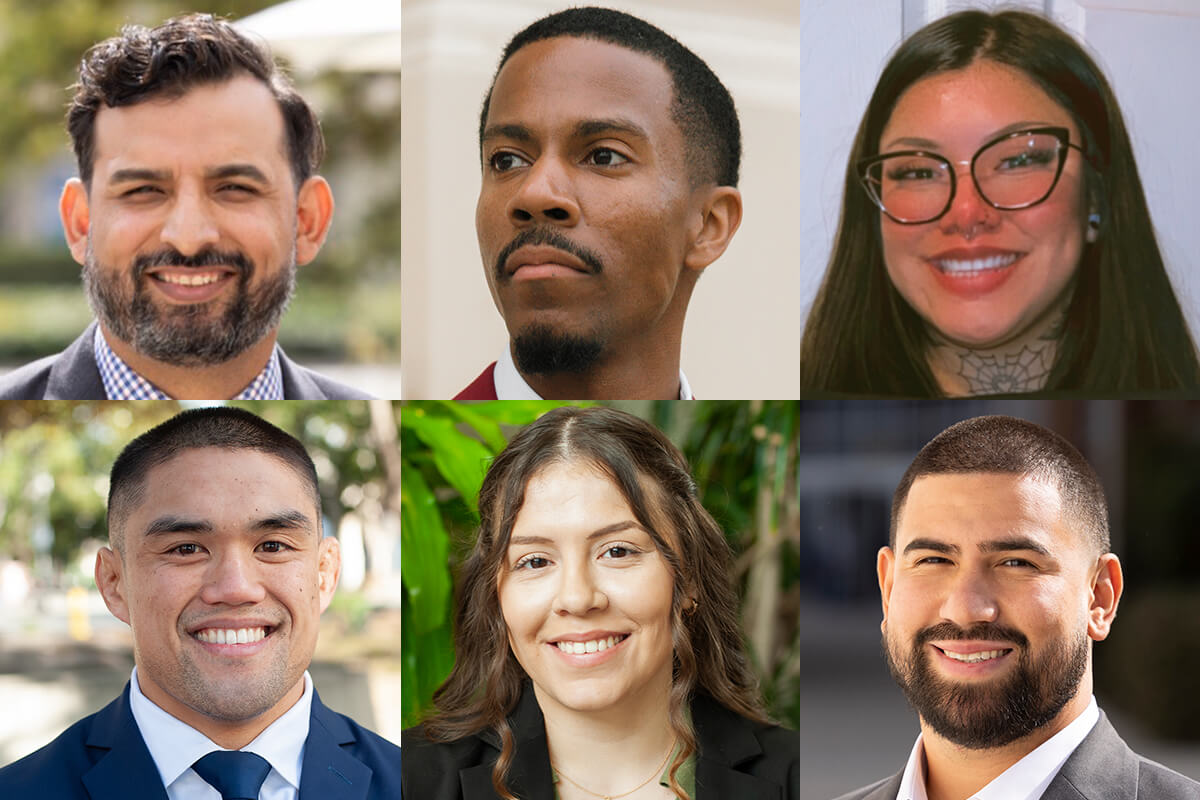
More than 550 veterans are pursuing degrees from CSUF. One cohort holds a dual role–as staff members at the CSUF campus Veterans Resource Center (VRC) and as scholars pursuing master’s degrees in social work (MSW).
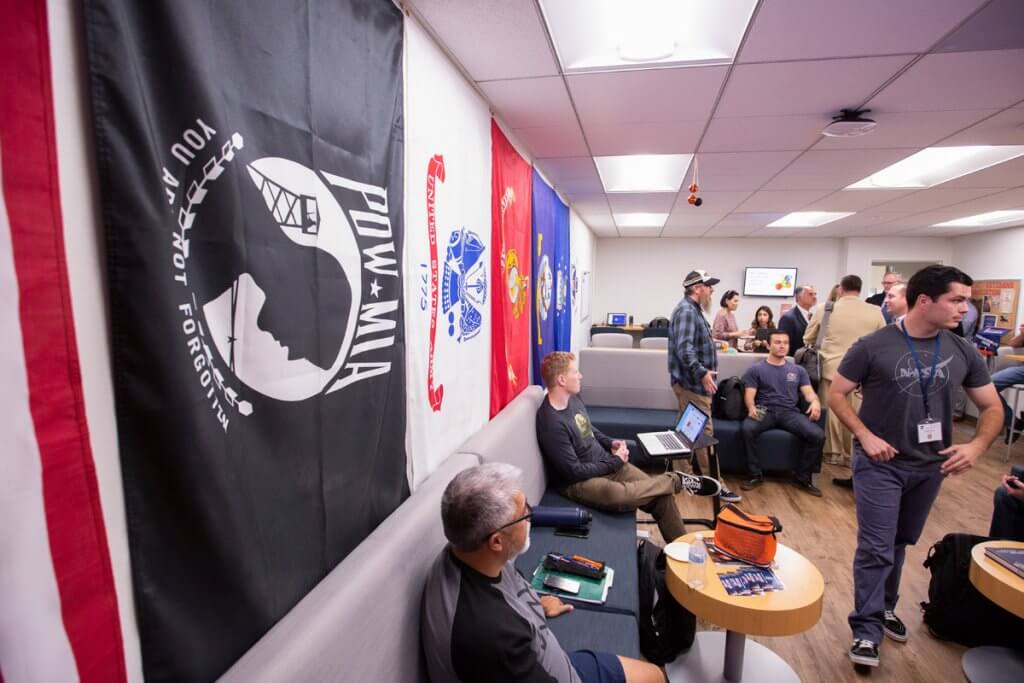
The transition from veteran to social service provider might not seem obvious, but as VRC Director, CSUF MSW alum and Army Veteran Alex Ortega tells it: “For these student veterans, service doesn’t end when military service concludes. It takes on new forms through education, mentorship, social work, and supporting others navigating their own transitions.”
“Veterans,” he adds, have a “commitment to supporting others, and… to pursue careers that will allow them to continue serving their communities.”
These CSUF student veterans are pursuing this service-oriented profession and shared in their own words, what drives them and their visions for giving back to society at large.
Erica Campos: Making Meaningful Difference–One Person at a Time
When U.S. Navy veteran Erica Campos enlisted at age 18, she didn’t realize how deeply military service would shape her purpose–nor anticipate that she would continue her tradition of service by enrolling in a social work program. Today, the first-generation college student is a graduate assistant at CSUF’s Veterans Resource Center and a PAVE (Peer Advisors for Veteran Education) peer advisor, with a passion for advocacy for women veterans.
To Campos, “Service means being part of something bigger than myself and making a difference in the lives of others.”
“Service,” she adds, “goes beyond wearing a uniform. It’s about showing up for others, being someone they can count on, and making people feel heard and supported.”
Her goal is to “continue giving back to the communities that have shaped me. At the end of the day, I want a career where I can make a meaningful difference in someone’s life, even if it’s just one person at a time:”
Her drive to help women is underscored by her time focused on Sexual Assault Prevention and Response advocacy, an experience that taught her key skills for anyone who is service-oriented.
“I learned the value of listening, advocating, and being there for someone during difficult times. I see how even the smallest interactions can make a difference. I want to be someone who helps others navigate challenges, find resources, and feel like they aren’t facing everything alone.”
Juan Vargas: Inspired by Family, Friends and Fellow Veterans
U.S. Marine Corps veteran and MSW student Juan Vargas dreams of becoming a social worker with the U.S. Department of Veterans Affairs or a nonprofit organization that supports veterans and their families. For Vargas, connection is key; he wants “to help veterans feel understood, know they are not alone, and remind them that there is still purpose and life after the military.”
Asked about what inspires him most, Vargas credits the encouragement he received from family and friends—and the veterans around him.
Without their love and support during and after my military service, I don’t think I would be where I am today, pursuing my Master’s in Social Work,” he says. “They taught me to never give up, no matter how difficult life gets. I’m also inspired by veterans who continue fighting their own battles after leaving the military. Seeing them overcome challenges and find their purpose again reminds me why I want to pursue social work and continue helping others.”
Stephanie Ramos: “Considering the Whole Person”
Navy veteran and PAVE Team Lead Stephanie Ramos dreams of working with the Defense Health Agency (DHA), focusing on improving mental health support and the transition process for service members preparing to enter civilian life. Aiming to also earn a Doctor of Psychology (PsyD) in Clinical Psychology, she hopes to apply her education in social work and psychology “to contribute to program development and policy improvements.”
Rather than treating discharge as a singular task, Ramos shares that she would “like to help create a transition process that considers the whole person, including their psychological, physical, and social needs, rather than treating separation as simply an administrative process.”
She asks: “Why do we spend so much time preparing individuals to serve, but [fail to] provide the same level of preparation when they leave?”
Her broader vision focuses on closing critical systemic gaps. “My goal is to use my Master of Social Work to address systemic gaps in military transition services,” she says. “I am particularly interested in improving the Transition Assistance Program (TAP), especially how service members are connected to mental health care, benefits, and community resources. I want to advocate for a process that does not end with providing information or referrals but includes meaningful follow-up to ensure individuals can actually access the support they need.”
Ramos wants to understand the interplay among policies, institutions, and social systems and what can be done to minimize barriers for veterans.
Raymond Garcia: Inspired by Students’ Drive, Dedication and Discipline
Raymond Garcia, the Access and Engagement Coordinator at the CSUF Veterans Resource Center and veteran who served in the United States Marine Corps, is in his second year of the Master of Social Work Flex Program. Currently interning for the Orange County Department of Education ACCESS, Garcia envisions a future in higher education leading a community college Veterans Resource Center, helping “veterans understand their next steps after exiting service” and teaching as a professor for a class “that goes over the integration from service member to community member.”
Garcia’s inspiration comes directly from the students he serves on campus: “What currently inspires me is the drive, dedication, and discipline that I see working in the CSUF Veterans Resource Center. Many of our military-connected students have so much on their plates, whether it be familial responsibilities, work obligations, or just personal interests. Yet they still make the time for their academics. Seeing their motivations day in and day out is something that inspires me to work through the MSW program while supporting the military-connected students through the VRC.”
Khiry Carter: “Everyone Deserves a Welcoming Place”
To Master of Social Work student and Navy veteran Khiry Carter, “Service means being a true pillar in your community and showing up every day as someone the people around you can depend on.”
The future Licensed Clinical Social Worker (LCSW) aims to “open a private practice and work directly with the people in my community so they have a safe space to heal and grow.”
Carter operates under the principle that “everyone deserves a welcoming space where they feel seen, heard, and genuinely supported.”
His commitment is grounded by the critical need for representation in mental health care: “What inspires me,” he says, “is the fact that there are not many people who look like me in this field. It motivates me to be the resource that my community truly needs and to keep answering the call of service for those in need.”
Jessie Echuary: Service as Recognizing Dignity and Strengths
U.S. Army veteran Jessie Echaury, a Senior Graduate Assistant at the CSUF Veterans Resource Center, is currently completing his MSW practicum with Project Kinship’s Youth Transformation Program, supporting system-impacted youth.
Echuary says: “My foundation for service was established during my time in the Army: It began with learning to show up for others, to be dependable, and contribute to something bigger than myself. Through social work, my understanding of service has grown to include listening without judgment and allowing those I serve to teach me about their experiences and what support means to them. Service means recognizing each person’s dignity and strengths while respecting their right to make their own decisions.”
Looking forward, Echaury plans to earn his LCSW, then a doctoral degree, and fulfill his dream to start and lead a nonprofit that combines clinical social work with recreation-based programs, including sports, art, music, and cultural activities.
“I want to create different ways for people to connect, explore healthy coping skills, and access support, especially those who may feel uncomfortable in traditional service settings,” he says.
By leveraging collaborative activities to break down stigma, he envisions meeting individuals where they feel most comfortable. “Asking for help can be difficult, and a shared interest can be a starting point for building trust,” he says. “What excites me most is working alongside communities to shape programs that reflect their interests, cultures, and needs while supporting healing and addressing challenges.”
Echaury is inspired by people. “Future generations… get me fired up. I’ve had the privilege of learning directly from youth, and their creativity, innovative ideas, and the ways they connect with one another are very inspiring,” he says. “They challenge me to stay curious, question my own assumptions, and think differently about what’s possible for our communities.”