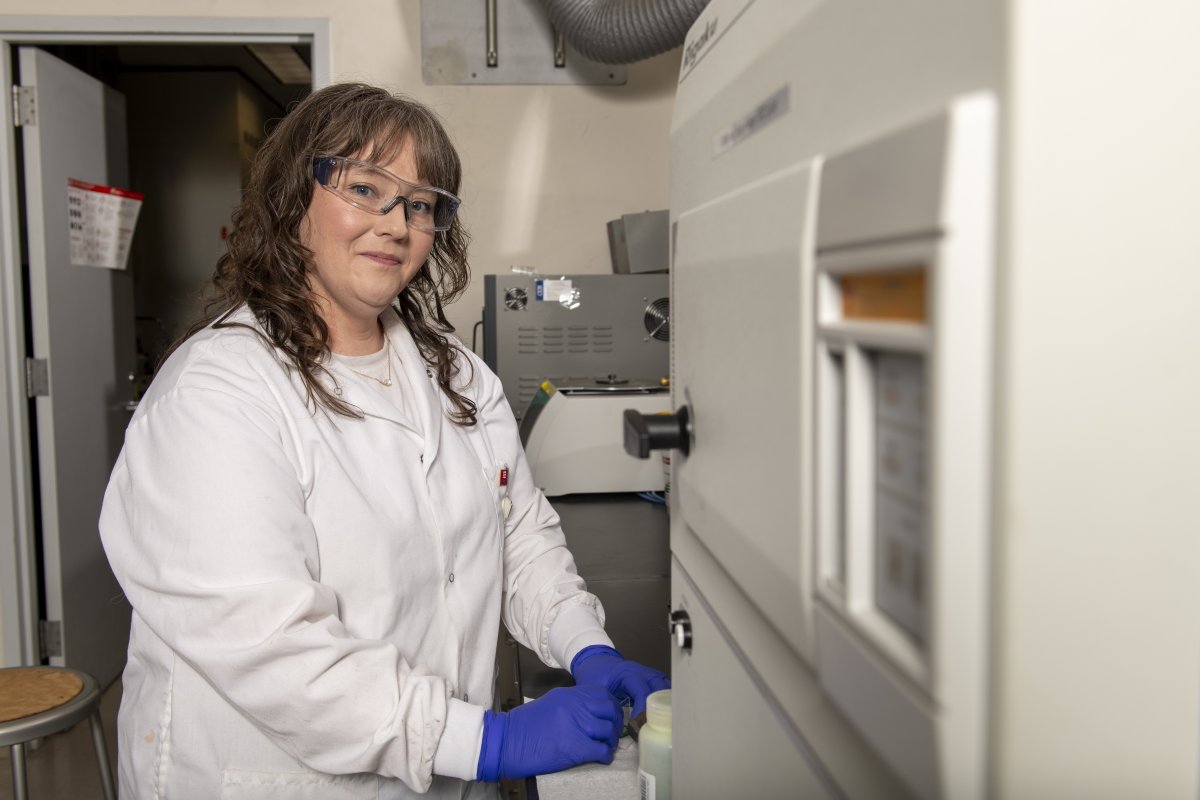
For her commitment to mentoring undergraduate students and for her own exceptional scholarship, Cal State Fullerton chemistry and biochemistry professor Allyson Fry-Petit has been honored as 1 of 8 Henry Dreyfus Teacher-Scholars in the nation by The Camille and Henry Dreyfus Foundation.
The Dreyfus award ranks among the nation’s most prestigious honors in chemical science, recognizing young faculty who have created an outstanding independent body of research and are deeply committed to undergraduate education. Fry-Petit is the fourth Dreyfus scholar from CSUF’s Department of Chemistry and Biochemistry.
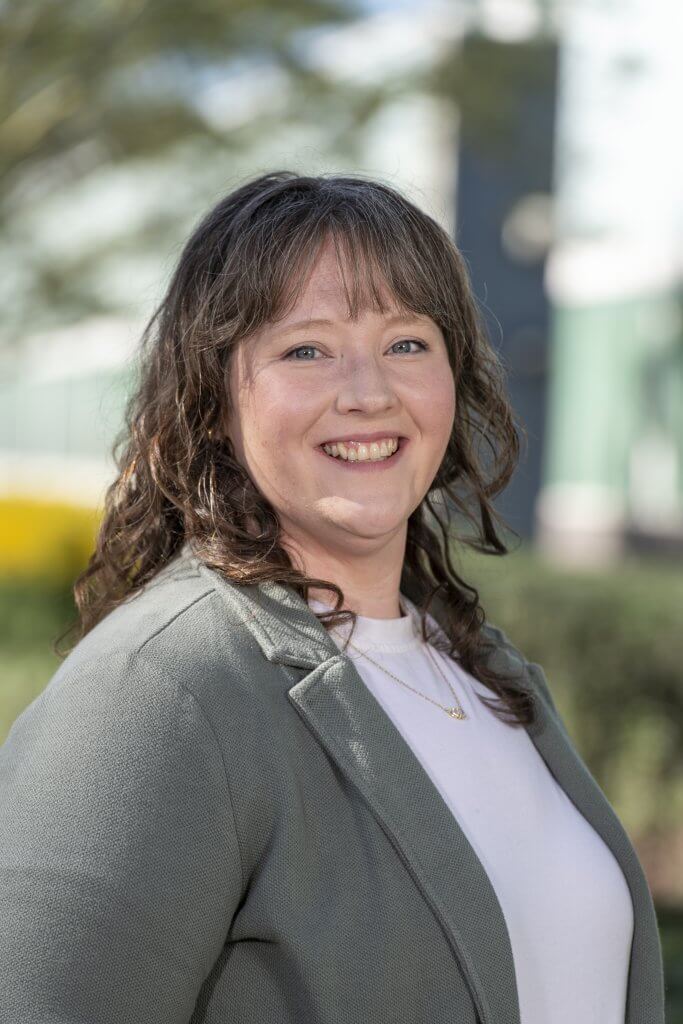
Fry-Petit’s work is focused on the fundamental chemistry behind the generation of alternative fuels such as hydrogen and the synthesis of novel materials used in MRI machines and bullet trains by monitoring solid-state reactions that occur under extreme conditions. She figures out why certain crystals behave the way they do at the atomic level. The findings may give scientists a playbook for building a future with cleaner energy, accessible medical diagnostics, and better electronics.
Fry-Petit said she was drawn to the Department of Chemistry and Biochemistry because it prioritizes high-quality research, supports undergraduate research, and values teaching. She has mentored over 70 undergraduate students and eight master’s students since she started her tenure at CSUF in 2015.
“The Henry Dreyfus Teacher-Scholar Award acknowledges faculty at primarily undergraduate institutions for their work in advancing teaching and research in chemistry with undergraduates in particular,” Fry-Petit said. “To get the award means that my efforts to push the envelope in both areas here at CSUF are recognized by the chemistry community, and that means a lot to me.”
Each teacher-scholar receives a $75,000 research grant. Fry-Petit said she looks forward to using the funds to support student travel to conferences and experiments at national labs. Those experiences are very influential for students’ development as scientists, she noted.
Fry-Petit has built the Fry-Petit lab, a state-of-the-art solid state chemistry research lab, at CSUF. As a solid state chemist, her research encompasses fundamental chemistry, method development and applied chemistry. Her expertise across multiple areas means she can support more students with diverse interests across the materials design pipeline.
“My group has become well known for our ability to make very large, high-quality samples and to perform robust X-ray diffraction measurements and analysis quickly,” Fry-Petit said. “This has resulted in our group being sought after as collaborators. Our independent and collaborative work has resulted in publications and grants, with more currently under review.”
Fry-Petit has served on the American Union of Crystallographers committee and the Spallation Neutron Source and High Flux Isotope Reactor User Group at Oak Ridge National Laboratory, a U.S. Department of Energy institution focused on high-performance computing, nuclear science, neutron science and materials, energy systems, and national security. Fry-Petit’s expertise in neutron scattering and diffraction methods was tapped for the National Institute of Standards and Technology’s “Neutrons for the Future” report on the development of a new research-grade nuclear reactor.
In recommending Fry-Petit for the Dreyfus award, Department of Chemistry and Biochemistry Chair Niroshika Keppetipola said she has made significant contributions to the curriculum in the department and CSUF’s College of Natural Sciences and Mathematics.
“Her contributions to advancing chemistry in the local and national context are reflected in her sustained commitment to curriculum innovation, student success, and educational leadership,” Keppetipola said. “Dr. Fry-Petit’s dedication to increasing accessibility, providing equitable opportunities for all students to succeed, and developing innovative, student-centered curricula has strengthened chemistry education for our students and the department.”
CSUF has the most Dreyfus scholars in the CSU system. Past winners include Andrew Petit (2025), Michael Groves (2024) and Fu-Ming Tao (2000).
“I often tell people that CSUF is a bit of a ‘unicorn’, a place where you can take risks in teaching and researching to discover the best ways to educate our students and make scientific discoveries,” Fry-Petit said. “Our students are doing research at a level that is not normal for students at this point in their training. This helps us to be very productive in research while having a relatively high teaching load.”