
Students in the Comparable Animal Physiology course recently shared what they learned about beetles, birds, bugs and insects, lizards, turtles and more — all of which can be found at the Arboretum and Botanical Garden at Cal State Fullerton.
“For many of the students, it was the first time they had visited the arboretum,” said Kristy Forsgren, professor of biological science, who teaches the class. “When I visited earlier, the only signage I saw about wildlife focused on the Monarch butterfly. I wanted my students to do a deeper dive into animal physiology, so we visited the arboretum and I told them to look around and see what other types of animals they could find.”
The students chose an animal to focus on, and each student created a poster providing detailed information and a drawing about their specific subject. The posters were displayed in the arboretum during the final week of classes, where the public could view them. The posters will be donated to the arboretum for use in school field trips and community-based programs.
“I spent time teaching the students how to create a basic drawing and they took it from there,” said Forsgren. “They chose how to design their posters and they had to provide the common and scientific names of their subject, information about how it lives and adapts in the arboretum, and an interesting fact.”
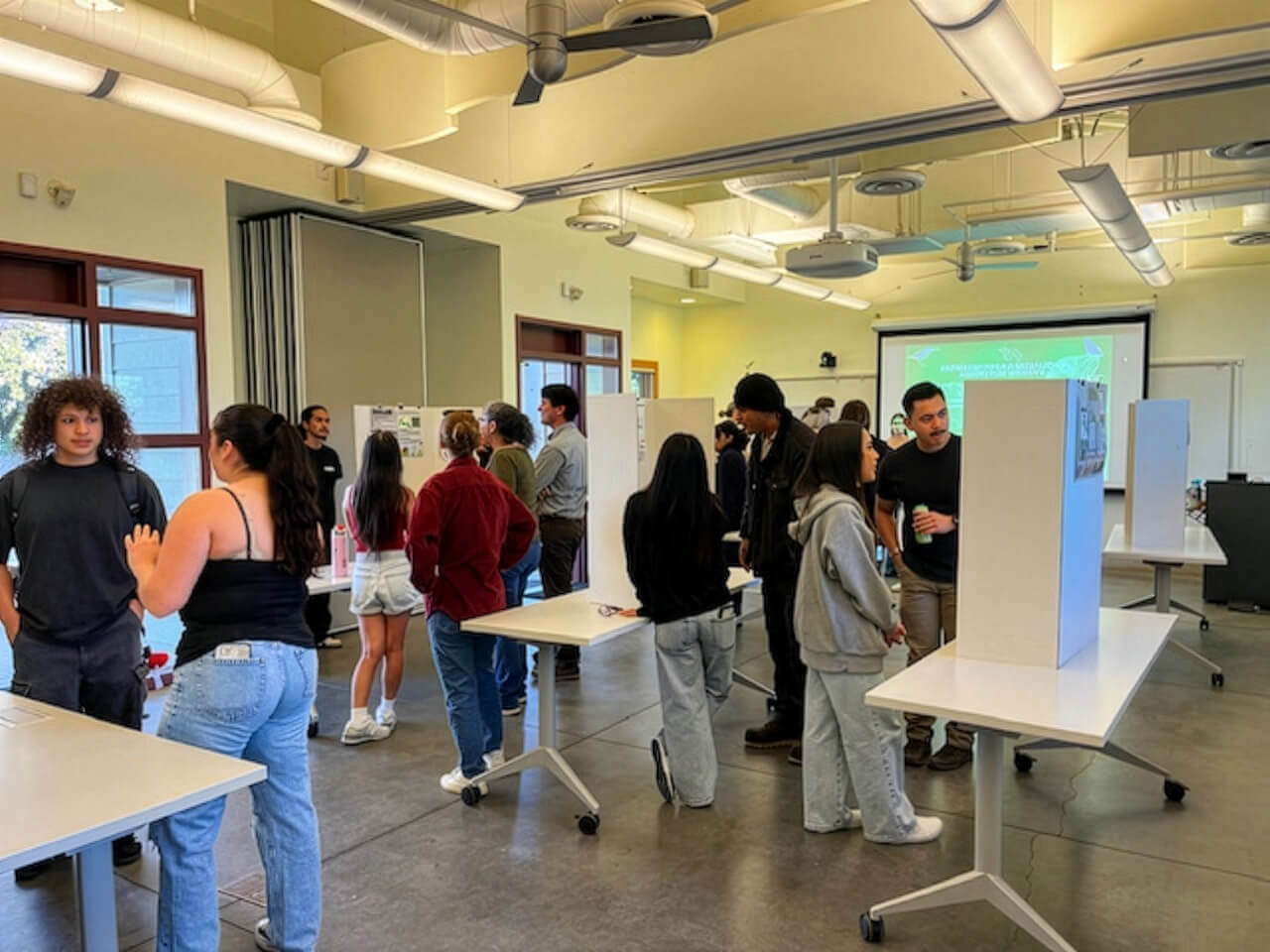
The posters include:
Night Heron: A bird whose diet consists mostly of fish. They have a technique called bill vibrating that creates vibrations in the water and mimics insect movements. This lures fish closer to the surface, where the heron can catch them. The poster was created by Nathalie Brabec.
Green Sunfish: These fish are found in freshwater systems across the country and can survive in urban streams with poor water quality. Although it is considered invasive in California, the Green Sunfish is an excellent predator and can be beneficial for ecosystems that are not adapted to its presence. The poster was created by Veronica Estrada.
Cochineal Beetle: These beetles insert their beak-like mouths into cactus pads to extract sap that helps them survive the desert environment. They secrete a waxy covering that prevents them from drying out. When pressed, they release a crimson dye that deters predators and serves as a warning. This dye is also used to color foods, fabrics, art and lipstick. The poster was created by Ella Gandeza.
Western Fence Lizard: The Western Fence Lizard may hold a clue to a cure for Lyme disease. As Western Black-legged tick nymphs feed on these scaly lizards, complement proteins in the lizard’s blood kill the bacteria. If one of these ticks bites a human or an animal, the disease is not transmitted. The poster was created by Sarah Doerr.
Flame Skimmer Dragonfly: Eggs are laid on the water and develop into nymphs that molt several times. When the nymphs reach the adult phase, they become exceptional hunters with a 90% chance of catching their prey. The poster was created by Tyler Johnson.
Western Honey Bee: The hives of this important pollinator are heating up. However, the bees adapt to heat by gathering outside the hive and flapping their wings to cool the air. In colder weather, they will clump together to radiate heat outward. The poster was created by McKenna Snyder.
Mallards: Their unique traits include increased muscle mass and fat to fuel long flights. Their hindlimb muscle function allows for vertical take-offs from land and water. They have highly sensitive bills for tactile feeding and a panoramic field of vision to detect potential threats. The poster was created by Catherine Tran.
Woodpeckers: These birds have a highly specialized head structure that allows them to survive repeated high-volume (20-25 strikes per second) and speed impacts while pecking. Their feet have two toes facing front and two toes facing backward, as well as curved claws. This allows them to secure a strong grip on vertical surfaces, such as tree trunks. This also provides stability and balance as they climb or drill into wood. The poster was created by Kristy Tran.
California Mantis: This California native can turn shades of gray or green to blend in with its surroundings and surprise its prey. Its 3D vision helps it determine how far away its prey is and it can rotate its head in an almost complete circle. Silent, still and lightning fast, the mantis often strikes its prey before it knows it is being watched. The poster was created by Aleah Sollis.
California Towhee: When mating, the male calls out to the female and if she responds, they create a duet. They sing together in a high-pitched squealing pattern with the same syllabic structure, so they are able to find each other based on their song. They frequently nest in poison oak, feeding on the small white berries the plant produces. The poster was created by Kassandra Kirby.
Red-Eared Slider Turtle: These turtles use a secondary means of respiration known as cloacal respiration, so they are able to absorb oxygen while underwater. This allows them to survive long periods of hibernation underwater. They are non-native and more aggressive than native turtles. The arboretum’s native turtles have been moved to another pond to help ensure their safety. The poster was created by Max Crisostomo.
Pin-Tailed Whydah: This invasive bird in California is known for brood parasitism, meaning it lays its eggs in the nests of other birds that raise the chicks. Because parents can only raise so many young birds, it limits possible future generations of the parent bird. This threatens native bird populations. The poster was created by Austin Flores.
Scaly-Breasted Munia: A small brown finch, originally from Asia, has found a home in California largely through the pet trade, meaning they either escaped or were released. They eat lots of grass seeds and are the host bird for the Pin-Tailed Whydah. The poster was created by Gaby Mendoza.
Tarantula Hawk: This is a wasp whose females paralyze their prey — tarantulas — in seconds without killing them. The female then lays her eggs inside the tarantula, where they develop and eventually emerge. The poster was created by Tyler Reindl.