
Cal State Fullerton has been recognized a second time for its environmental efforts with a gold rating from the Association for the Advancement of Sustainability in Higher Education.
The university first achieved gold in the association’s Sustainability Tracking, Assessment and Rating System in 2022; that award lasted until CSUF again received AASHE’s gold rating in 2025.
The nonprofit association provides training and resources to help colleges and universities incorporate sustainability into campus practices, operations and curriculum.
CSUF’s gold ranking “speaks to the commitment the university has toward a sustainable future,” said Kristen Jasko, CSUF’s assistant vice president of university services.
Nearly 400 institutions worldwide have ratings from AASHE, which are based on criteria including how coursework and research incorporate environmental concepts, how eco-friendly campus energy use and waste handling are, and issues such as affordability and well-being of the campus community.
To earn the latest gold rating, the university compiled a report with more than 1,200 data points on its programs, policies and actions, said Elissa Thomas, who recently retired as CSUF’s director of sustainability and transportation demand.
Among the highlights are long-term accomplishments, such as reducing campus water consumption by 30% since 2012, shifting a majority of the university’s vehicle fleet to alternative fuels and generating more than 20% of CSUF’s power with on-site solar panels.
Recent achievements include more than doubling the number of electric vehicle charging ports to 100, providing students hands-on experiences through internships at the Arboretum and Botanical Garden and Urban Agriculture Community-based Research Experience Project, and offering nearly 900 courses with a sustainability element.
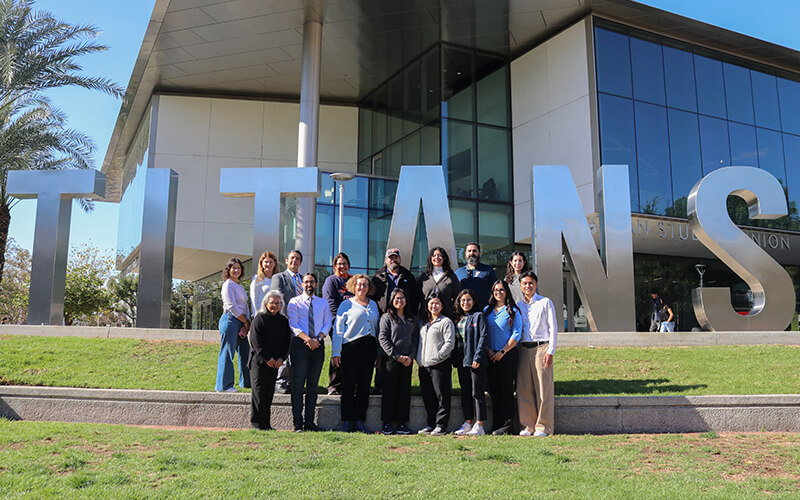
“The gold rating reflects the decades-long contributions of many members of our campus community to create a sustainable campus,” shared CSUF sustainability analyst Stephanie Del Rosario, adding that it also helps position the university as an environmental leader in higher education.
While the current rating is valid through mid-2028, CSUF sustainability advocates aren’t resting and have a number of new and ongoing initiatives in the works.
More water will be saved through programs with state or local grants and rebates, such as replacing grass with drought-tolerant plants near the Nutwood Parking Structure and retrofitting campus restroom fixtures.
New facilities projects follow nationally recognized green building standards, and the university will be forming a working group to explore how CSUF can meet a state mandate to become carbon-neutral by 2045.
Tamara Wallace, CSUF’s energy and resilience manager, noted that future targets include reducing emissions from the campus’s natural gas-fueled power plant.
In an effort to reduce drivers commuting alone to campus, the university recently partnered with the Pave Commute app for personalized ride matching and rewards across modes including cycling, walking, carpooling and transit. CSUF is also collaborating with the city of Fullerton and other agencies to improve bike and pedestrian safety on and around the campus.
Del Rosario said the data gathered to earn the gold rating will help guide long-term environmental efforts at CSUF. “The assessment creates a benchmark for the campus to measure all future progress against.”