The College of Humanities and Social Sciences is committed to creating a sense of belonging for all students, faculty and staff. This includes fostering classroom environments in which people can share opinions shaped by different life experiences and cultural backgrounds. It also means training students in active listening and effective communication in order to encourage constructive dialogue and prepare them to thrive in a diverse society.
During a time of increasing polarization, the College of Humanities and Social Sciences launched its Teaching Through Polarization initiative, which aims to teach students, faculty and staff how to engage productively across different viewpoints.
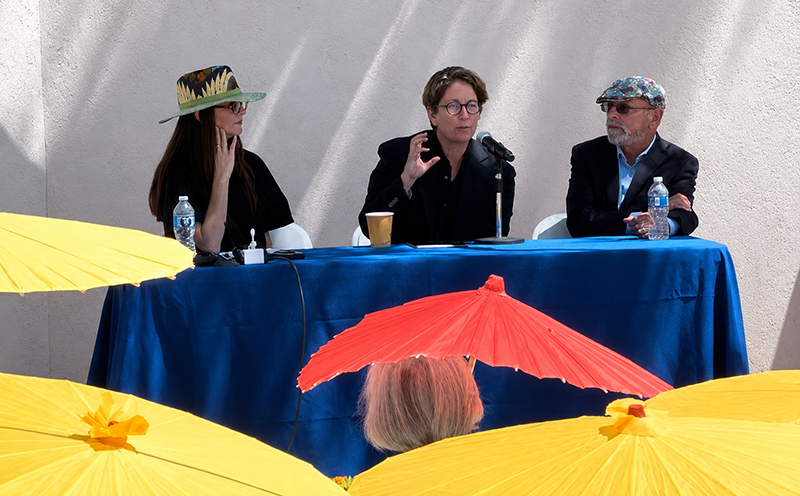
On April 14, the college hosted the “Let’s Talk About It: How to Have Difficult Conversations and Connect Across Differences” event, which welcomed alumni, Osher Lifelong Learning Institute participants, faculty, staff and students. This intergenerational event engaged participants in a complex scientific and social question: How many genders are there?
Before exploring the question, Alissa Ackerman, associate professor of politics, administration and justice, provided insights on different communication tools, including active listening, asking questions and learning to sit with disagreement. Participants engaged in roundtable discussions where they were given questions to consider, viewpoints to hear and conversations to facilitate.
The training was followed by a panel discussion, featuring Joseph Manson, an evolutionary social scientist and UCLA professor emeritus, and Ella Ben Hagai, CSUF associate professor of psychology and co-author of the book “Undoing the Gender Binary.”
They engaged with questions that explored the biological differences between men and women, the significant historical and regional differences in gender roles, and the general decline in reproduction across many parts of the world. Their backgrounds offered different perspectives on gender. Rather than reducing the topic to a simple right-or-wrong debate, the event encouraged students to think critically and engage with the complexity of the subject.
One of the goals of the Teaching Through Polarization initiative is to shift conversations from separation to connection. Learning how to communicate with people who hold different beliefs or experiences is an important skill not only in the classroom, but also in future workplaces, communities and relationships.
The Teaching Through Polarization initiative will continue during the 2026-27 academic year. Visit the College of Humanities and Social Sciences website to learn about upcoming college events.