Are people taking the human out of the equation? And what happens when the infrastructure powering AI starts competing for the same resources communities rely on? These are some of the questions at the center of the College of Humanities and Social Sciences’ latest episode of “Lowkey Confused? HSS Explains!”
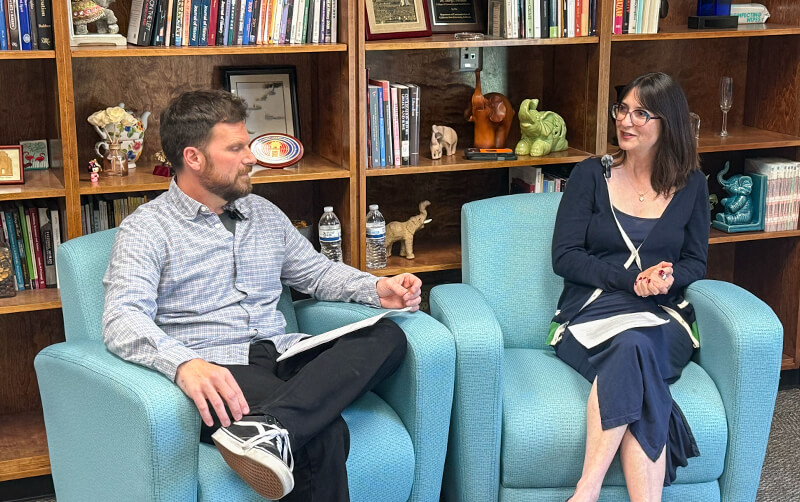
Jessica Stern, dean of the College of Humanities and Social Sciences, sat down with David Adams, associate professor of politics, administration and justice, whose research examines how institutions adapt to environmental, political and technological change.
Government agencies are already using AI for public benefits, traffic management, crime centers and more. But what happens when these AI models get a decision wrong? Is there a human reviewing those decisions to catch mistakes?
Adams shares examples of what can happen when there isn’t enough room for human judgment, including a case in Indiana where a woman in hospice care missed a required phone appointment and lost her benefits as a result.
“You may be taking the human out of the loop who may realize this person is different or this situation is different,” Adams said.
Then there is the question of accountability. Who is responsible when a decision made with AI harms someone?
“I don’t know how much we’ve worked out who is to blame when AI is the culprit,” Stern said.
“The agency’s going to point to the vendor,” Adams said. “And the vendor is going to point to the agency. Then the agency will point to the model. It’s going to go circular.”
While the public may only see the final result, many decisions about how these systems operate are made behind the scenes when government agencies sign contracts with AI companies. Those contracts can determine how the technology is used, what happens to the information it collects and what protections are put in place.
Then there are the brains behind the models: the data centers themselves. These massive facilities need land and resources to operate, including water, electricity and high-speed fiber. As more data centers are built across the country, communities are increasingly being asked to consider what they are willing to give up for the technology and convenience it provides.
Who should get to make those decisions? The people living in those communities? Local governments? State agencies? Adams and Stern discuss how data centers are approved and why determining where those decisions are actually made can be more complicated than it seems.
They also look at why a city might want a data center in the first place. Data centers can generate significant tax revenue without the long-term population growth that accompanies other large developments. At the same time, they raise questions about electricity, water, land use and what happens to a community if that infrastructure is no longer needed.
Adams and Stern unpack these questions and consider an even bigger one: As AI becomes part of everyday life, who gets to decide what we are willing to give up for it?
Visit the “Lowkey Confused? HSS Explains!” website to watch or listen to full episodes and explore transcripts, background resources and terms from each conversation. Hosted by Stern, the series brings HSS faculty experts into the conversation to tackle the big questions people are curious about. From pop culture and politics to history, happiness and emerging technologies, faculty experts break down the topics shaping the world and help make sense of them.